What Is Data Lineage?
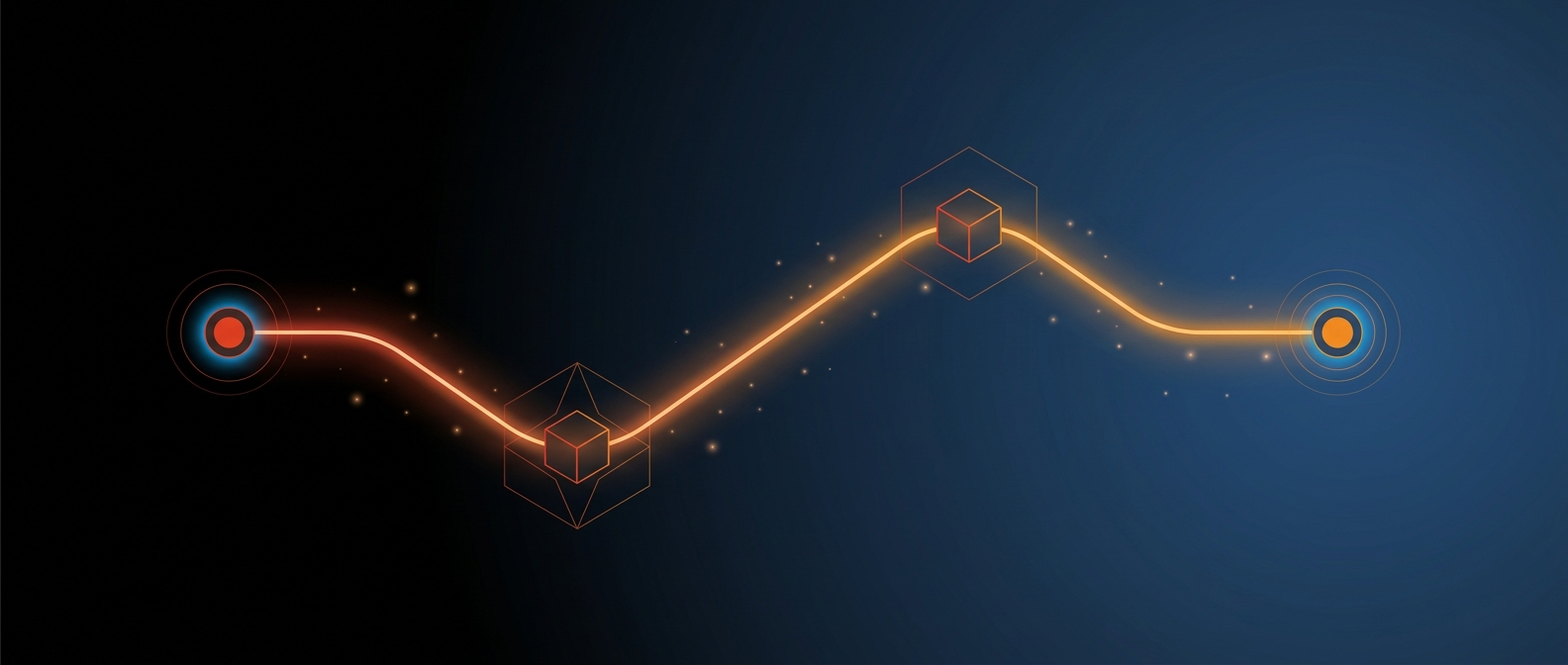
Data lineage is the traceable record of where data comes from and how it moves, combines, and changes on its way from a source system to a report or model. It is the map that lets you follow any number on a dashboard back through every transformation, join, and calculation to the original transactions it came from. Lineage answers the question every finance leader eventually asks: where did this number come from, and can I trust it?
Lineage works in both directions. Tracing backward from a report shows the sources and steps that produced a figure. Tracing forward from a source shows everything downstream that would be affected if that source changed. Both views are essential, one for trust and audit, the other for managing change safely.
Lineage is the answer to the question every CFO eventually asks: where did this number come from? If you cannot trace it back through each transformation to the source transaction, it becomes difficult to defend, and in a finance organization that traceability is what gives the numbers their weight.
Marla Nelson, CTO, QuickLaunch Analytics
Why Data Lineage Matters
Lineage is what makes data trustworthy and defensible. When a number can be traced to its source, it can be verified, audited, and explained. When it cannot, every figure is a matter of faith, and faith does not survive an audit or a board challenge. For regulated industries and for any finance organization, lineage is not optional.
Lineage also makes change safe. Data systems are constantly evolving: a source changes a field, a calculation is updated, a table is restructured. Without lineage, no one knows what those changes will break downstream. With it, the impact of any change can be traced before it is made. This is what keeps a complex data environment from becoming too fragile to touch.
For AI, lineage is part of trust. When an AI system produces an answer, the ability to trace the data behind it is what makes the answer auditable. Lineage is a core component of the governance that AI depends on.
How Data Lineage Works
Capturing the flow. Lineage is built by tracking data as it moves through pipelines and transformations. Each step, an extraction, a join, a calculation, is recorded so the full path is known.
Column-level detail. Strong lineage tracks not just which tables feed which, but which specific columns and calculations produce a given field. Column-level lineage is what lets you trace a single metric precisely.
Visualization. Lineage is usually presented as a graph showing how sources connect to outputs through transformations, so a person can follow the path visually rather than reading code.
Modern lakehouse platforms like Microsoft Fabric and Databricks capture much of this lineage automatically as data flows through their pipelines, which makes lineage a built-in property of the foundation rather than a separate documentation effort.
Data Lineage in ERP Environments
Tracing lineage through ERP data is both essential and difficult. A figure like consolidated revenue may be built from many source tables, with code translations, currency conversions, and eliminations along the way. Being able to trace that figure back through each step to the underlying transactions is what makes it defensible to an auditor or a CFO.
For organizations running multiple ERPs, lineage is even more important, because a consolidated number draws from several systems that each transform data differently. Without clear lineage across those systems, a consolidated figure cannot be fully explained, which is a serious problem when it appears on a financial statement.
Common Challenges and Best Practices
- Aim for column-level lineage. Table-level lineage is a start, but tracing a specific metric requires knowing which columns and calculations produced it.
- Capture lineage automatically. Lineage maintained by hand goes stale immediately. Use a foundation that captures it as data flows.
- Use it before you change things. Trace downstream impact before altering a source or calculation, so changes do not silently break reports.
- Connect lineage to definitions. Lineage and the semantic layer work together: one shows where a number came from, the other what it officially means.
- Treat it as governance, not documentation. Lineage is part of what makes data trustworthy and auditable, not a nice-to-have diagram.
Frequently Asked Questions
What is the difference between data lineage and data provenance?
The terms are closely related and often used interchangeably. Provenance emphasizes the origin of data, where it came from. Lineage emphasizes the full journey, including every transformation along the way. In practice, lineage is the more common term for the end-to-end traceable record.
Why is data lineage important for compliance?
Regulated reporting requires that figures can be traced to their sources and that the calculations behind them can be explained. Lineage provides exactly this, which is why it is essential for financial reporting, audit, and regulatory compliance.
Is data lineage part of data governance?
Yes. Lineage is one of the core components of data governance, alongside access control, data quality, and definitions. It is what makes data traceable and therefore trustworthy and auditable.
Data Lineage and QuickLaunch’s Approach
QuickLaunch Analytics builds on lakehouse platforms that capture lineage as data flows through the foundation, so enterprise application data can be traced from source transaction to final report. Combined with the enterprise semantic layer that governs what each metric means, this gives finance teams numbers that are both defined and defensible, refined across 250+ enterprise implementations.