
What Is a Work Breakdown Structure (WBS)?
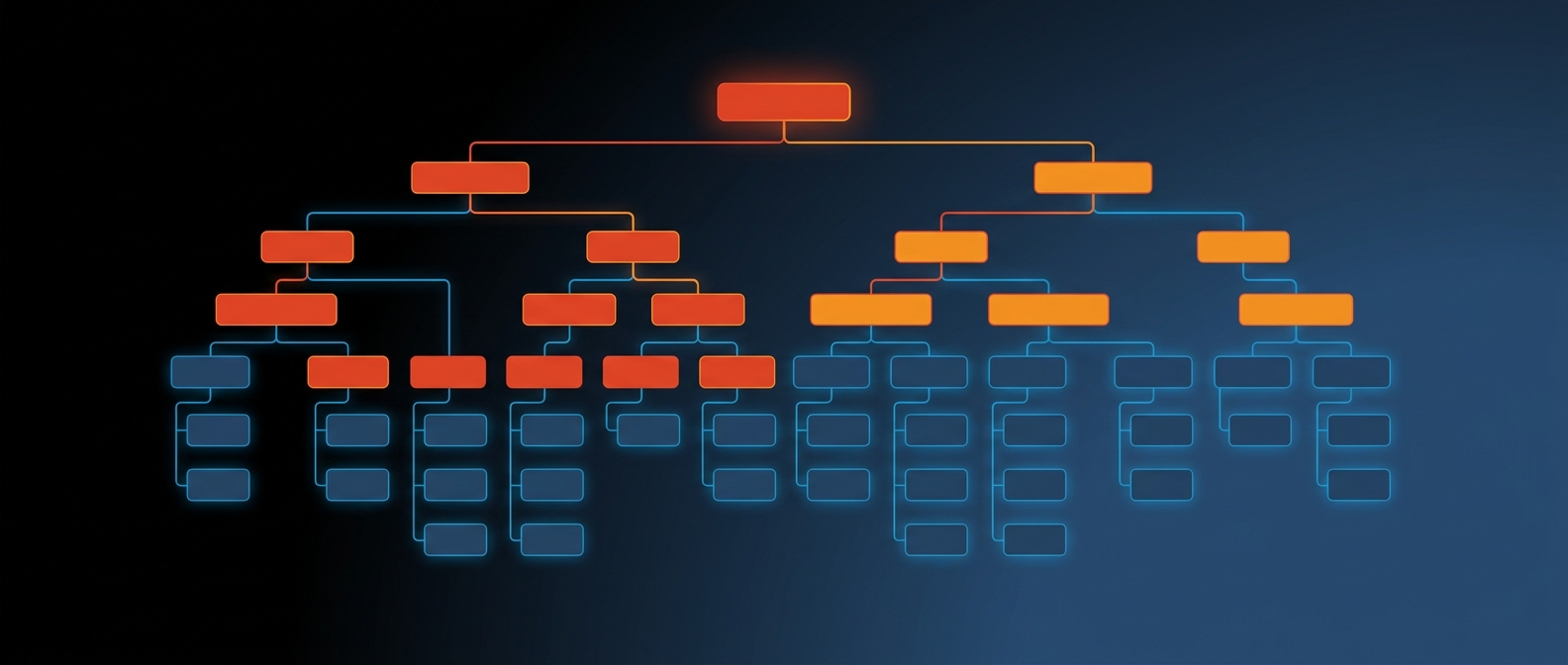
A work breakdown structure, or WBS, is a hierarchical decomposition of a project into smaller, more manageable pieces. It takes a large project and breaks it into phases, deliverables, and tasks, organizing all the work into a tree where each level is a more detailed breakdown of the one above. The WBS is a foundational tool in project management, and in project-based industries like construction and engineering it is the backbone of how work is planned, costed, and tracked.
The core idea is that big projects are too large to manage as one thing, but very manageable once broken into defined components. The WBS provides that breakdown, and once it exists, almost everything else, budget, schedule, progress, reporting, hangs off it.
How a WBS Is Structured
A WBS is hierarchical, a parent-child hierarchy of work. At the top is the whole project. Below it sit major phases or deliverables, and below those, progressively finer breakdowns down to individual work packages, the smallest units that get assigned, scheduled, and costed. Each element typically carries a code that identifies its place in the structure.
A key principle is that the breakdown is by deliverable or outcome, what is produced, not just a list of activities. Done well, the WBS captures the entire scope of the project, with no work falling outside it and no overlap between elements.
Why the WBS Matters for Cost and Reporting
The WBS is what makes project cost and progress measurable. Because costs, budgets, and schedules are assigned to WBS elements, a project manager can see how each component is performing, not just the project as a whole. Job cost reporting, earned value, and progress tracking all roll up through the WBS, so a problem in one work package is visible rather than hidden in a project-level total.
This is why the WBS is central to job cost analytics in construction and engineering. The structure is the framework that turns a mass of transactions into an organized, analyzable view of how a project is doing.
The WBS in Analytics
In analytics, the WBS is the dimension that organizes project data. Bringing project costs and progress into a reporting platform along with the WBS lets leaders drill from the whole project down through phases to individual work packages, and roll detail back up to a portfolio view. The hierarchy is what enables that drill-down and roll-up.
Modeling the WBS correctly, as a clean hierarchy that costs and progress attach to, is much of what makes project analytics useful. Get it right and project reporting becomes navigable at any level; get it wrong and the numbers are hard to interpret.
Frequently Asked Questions
What is a work breakdown structure?
It is a hierarchical decomposition of a project into smaller, manageable components, phases, deliverables, and work packages, organized as a tree. It is a foundational project management tool and the framework that cost tracking, scheduling, and reporting are built on.
Why is a WBS important?
Because it makes project cost and progress measurable at a detailed level. Budgets, costs, and schedules attach to WBS elements, so performance can be tracked per component and rolled up. Job cost reporting and progress tracking all depend on the WBS as their organizing structure.
How is a WBS used in reporting?
It serves as the dimension that organizes project data, letting leaders drill from the whole project down to individual work packages and roll detail back up to a portfolio view. Modeling the WBS as a clean hierarchy is what makes project analytics navigable at any level.
The WBS and QuickLaunch’s Approach
QuickLaunch Analytics models the work breakdown structure as a clean hierarchy in the foundation, so project costs and progress attach to it and roll up correctly. Construction and engineering firms can drill from portfolio to work package and back, with reporting that follows how projects are actually structured, on a foundation refined across 250+ enterprise implementations.
About the Author