What Is a Knowledge Graph?
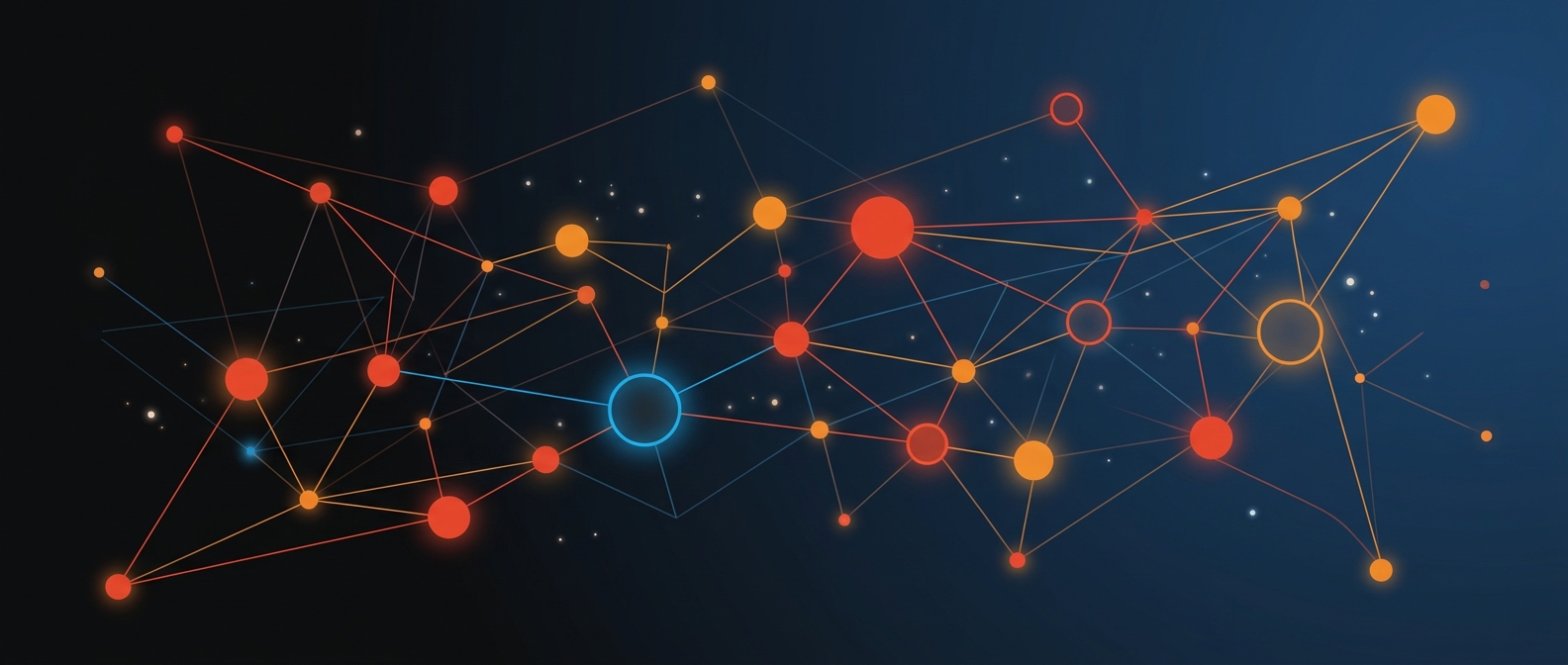
A knowledge graph is a way of representing data as a network of entities and the relationships between them. Instead of storing information in rows and columns, a knowledge graph stores it as nodes (the entities, such as a customer, a product, or a location) connected by edges (the relationships, such as “purchased,” “located in,” or “supplied by”). The result captures not just the facts about each entity, but how everything connects, which is often where the most valuable understanding lives.
The idea became widely known through search engines, which use knowledge graphs to understand that a query about a person, place, or company refers to a real entity with known relationships, rather than just matching keywords. The same approach now underpins many AI and data applications, because representing relationships explicitly lets a system reason about connections in a way that flat, tabular data does not.
Why Knowledge Graphs Matter
Much of the value in enterprise data lies in relationships, not just individual facts. Which customers are connected to which suppliers? How does a change in one part of the supply chain ripple to others? Questions like these are about connections, and they are hard to answer with data stored as isolated tables. A knowledge graph makes the relationships first-class, so these connected questions become answerable.
Knowledge graphs have become especially relevant to AI. AI systems reason better when they have structured knowledge of how things relate, and knowledge graphs provide exactly that. Combined with the language abilities of modern AI, a knowledge graph can ground the AI in an organization’s real entities and relationships, which improves the accuracy and trustworthiness of its answers. This pairing of knowledge graphs and AI is an active and growing area.
How a Knowledge Graph Works
Entities as nodes. The things the data is about, customers, products, suppliers, locations, are represented as nodes in the graph, each with its attributes.
Relationships as edges. The connections between entities are represented explicitly as edges, each with a type that describes the relationship. This is what distinguishes a knowledge graph from a simple data store.
A semantic layer of meaning. A knowledge graph often includes definitions of what entity types and relationship types mean, giving the data a layer of shared meaning that both people and machines can use.
Traversal and reasoning. Because relationships are explicit, a system can traverse the graph, following connections from one entity to related ones, to answer questions and infer new facts that were not stored directly.
Knowledge Graphs and Enterprise Data
Enterprise data is full of entities and relationships that a knowledge graph can capture: customers, vendors, products, employees, and the many ways they connect across ERP, CRM, and operational systems. Building a knowledge graph from this data depends on first having clean, well-understood entities, which is where master data and golden records become foundational. A knowledge graph built on duplicated or inconsistent entities inherits those problems.
This connects knowledge graphs to the broader work of building a strong data foundation. The same governed, well-modeled data that supports reliable analytics and AI is what a useful knowledge graph requires. As organizations apply AI to their data, a knowledge graph layered on a clean foundation is one way to give that AI a structured understanding of the business and its relationships.
Common Challenges and Best Practices
- Start with clean entities. A knowledge graph depends on well-defined, deduplicated entities. Master data and golden records are the foundation; build them first.
- Model relationships that matter. Focus on the connections that carry real value for the questions the organization needs to answer, rather than mapping everything.
- Define meaning clearly. Give entity and relationship types clear definitions, so the graph is understandable to both people and machines.
- Connect to the data foundation. A knowledge graph works best layered on the same governed, well-modeled data that supports analytics and AI.
- Pair with AI deliberately. Knowledge graphs and AI complement each other. Use the graph to ground AI in real entities and relationships for more trustworthy answers.
Frequently Asked Questions
What is the difference between a knowledge graph and a relational database?
A relational database stores data in tables of rows and columns, with relationships handled through keys and joins. A knowledge graph stores data as entities connected by explicit relationships, making the connections first-class. Knowledge graphs are better suited to questions that are fundamentally about how things relate.
How do knowledge graphs relate to AI?
Knowledge graphs give AI structured knowledge of how entities relate, which helps it reason more accurately. Pairing a knowledge graph with modern AI can ground the AI in an organization’s real entities and relationships, improving the accuracy and trustworthiness of its answers.
What do you need to build a knowledge graph?
Clean, well-defined entities are the foundation, which depends on good master data and golden records. From there, the relationships between entities are modeled explicitly. A knowledge graph built on inconsistent or duplicated entities inherits those problems, so the data foundation comes first.
Knowledge Graphs and QuickLaunch’s Approach
QuickLaunch Analytics builds the clean, governed data foundation that a useful knowledge graph requires. By reconciling entities from across ERP and other systems into consistent, deduplicated form, QuickLaunch provides the well-defined entities and relationships a knowledge graph depends on, which in turn helps ground AI in the real structure of the business, on a foundation refined across 250+ enterprise implementations.
About the Author